Loading conditions…
Edibility
Choice
Lookalike Danger
1 / 5
Habitat
🌲 Conifer forests
Season
Aug – Oct
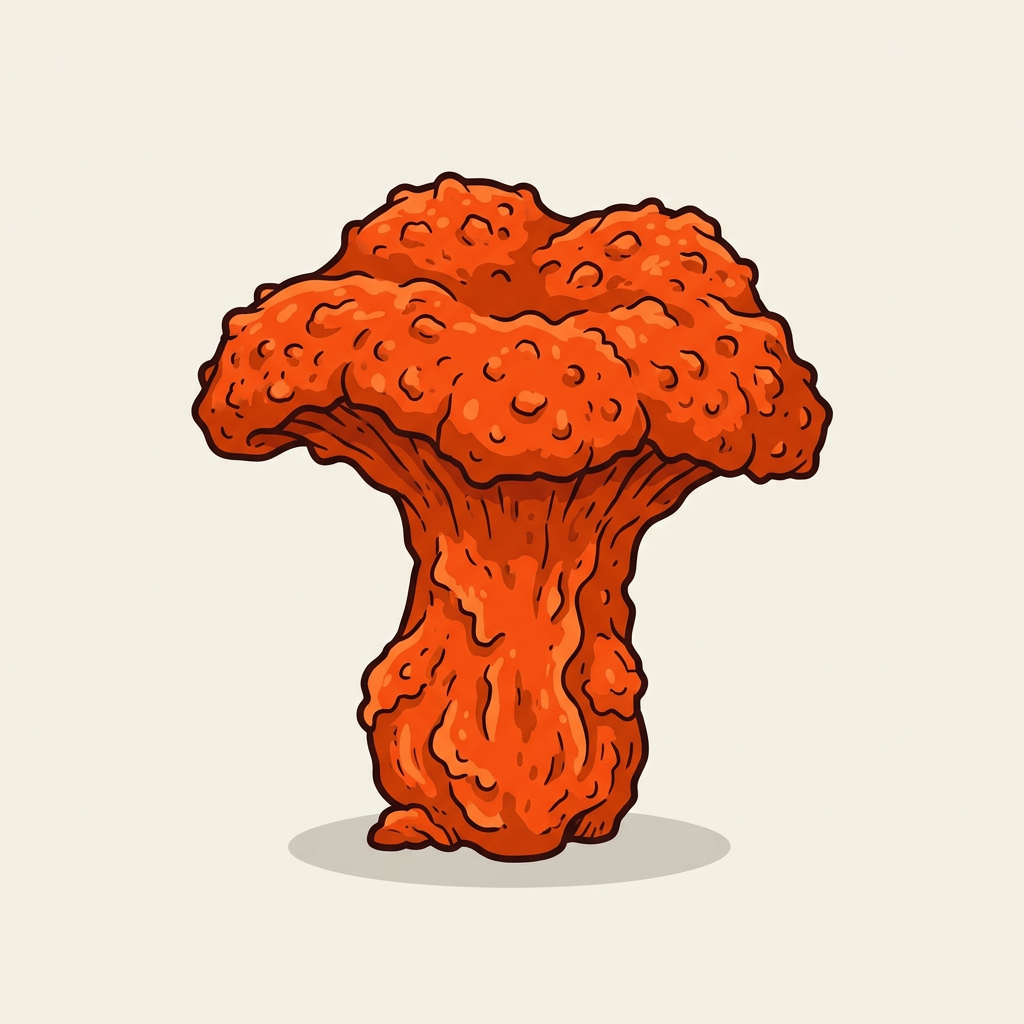
"Not a mushroom — a parasite that transforms a mediocre russula into a dense seafood-flavored feast."
🌳 Host Trees & Plants
This species is found with or partners with the following hosts. Ectomycorrhizal hosts (green border) form a root-level partnership; ericoid / arbutoid shrubs (purple border) share the same mycorrhizal networks.
Conifer Forest
Pinaceae (generic)
Ectomycorrhizal
Generic conifer habitat — pine, spruce, fir, hemlock, or Douglas-fir. Shown when the species is reported from conifers without a specific tree.
Not actually a mushroom species — it's a parasitic fungus (Hypomyces) that attacks Russula or Lactarius mushrooms, transforming them into a bright orange-red, firm, seafood-flavored delicacy.
Habitat
Mixed conifer forests. The parasite needs a host Russula or Lactarius, so look where those grow — moist, mossy conifer forests at mid elevations.
Season Windows by Region
Region
Jan
Feb
Mar
Apr
May
Jun
Jul
Aug
Sep
Oct
Nov
Dec
Lincoln NF / Sacramento Mtns
NM · 4,500–11,973 ft
Sandia Mountains / Cibola NF
NM · 5,000–10,678 ft
Shasta-Trinity NF
CA · 1,500–14,179 ft
Mendocino NF / Yolla Bolly
CA · 1,500–8,092 ft
Sequoia NF / Kern Plateau
CA · 1,500–9,000 ft
Umpqua NF / Diamond Lake
OR · 1,000–9,173 ft
Siuslaw NF / Oregon Dunes
OR · 0–4,097 ft
Colville NF / Selkirks
WA · 1,800–7,309 ft
Jones Pass Road
8,000–11,000 ft
Gordon Gulch / Nederland
7,000–9,000 ft
Kenosha Pass
8,000–10,500 ft
Guanella Pass Corridor
9,000–12,000 ft
Vasquez Creek / Winter Park
8,500–11,000 ft
Gunnison NF North — Crested Butte
8,500–12,000 ft
Gunnison NF South — Almont/Pitkin
8,000–11,000 ft
Cottonwood Pass
9,000–12,000 ft
San Juan NF — Pagosa Corridor
7,500–11,000 ft
Ruby Mountains
NV · 6,000–11,387 ft
Spring Mountains / Mt Charleston
NV · 6,000–11,916 ft
Jarbidge Wilderness
NV · 6,500–10,839 ft
San Juan NF — Silverton/Durango
8,000–12,000 ft
Grand Mesa
9,000–11,000 ft
Glenwood Canyon / White River NF
6,500–9,500 ft
Vail / Eagle County
8,000–11,000 ft
Steamboat / Routt NF
7,000–10,000 ft
Pike NF South / Tarryall
7,500–10,500 ft
Royal Gorge / Wet Mountains
6,500–9,500 ft
Leadville / Arkansas Headwaters
9,000–12,000 ft
Poudre Canyon / Roosevelt NF
6,500–10,000 ft
Rampart Range / Palmer Divide
7,000–9,500 ft
Clearwater Mountains
ID · 2,500–7,500 ft
Boise Mountains
ID · 4,000–9,500 ft
Salmon River / Lemhi
ID · 4,500–10,000 ft
Sun Valley / Wood River
ID · 5,500–10,500 ft
Bighorn Mountains
WY · 5,500–13,000 ft
Bridger-Teton / Tetons
WY · 6,000–13,500 ft
Wind River Range
WY · 7,000–13,800 ft
Absaroka / Shoshone NF
WY · 6,000–12,500 ft
North Cascades
WA · 1,500–8,000 ft
Central Cascades / Snoqualmie
WA · 1,500–7,000 ft
Olympic Peninsula
WA · 500–6,000 ft
Gifford Pinchot / South Cascades
WA · 1,000–8,000 ft
Okanogan Highlands
WA · 2,500–7,500 ft
Mt Hood / North Oregon Cascades
OR · 2,000–8,000 ft
Central Oregon / Deschutes
OR · 3,500–9,000 ft
South Cascades / Klamath
OR · 4,000–9,000 ft
Wallowa Mountains
OR · 3,500–9,500 ft
Blue Mountains
OR · 4,000–8,000 ft
Wasatch Mountains
UT · 5,500–11,500 ft
Uinta Mountains
UT · 7,000–13,500 ft
Manti-La Sal
UT · 6,000–12,700 ft
Sangre de Cristo / Carson NF
NM · 7,000–13,100 ft
Jemez / Santa Fe NF
NM · 6,500–11,200 ft
Santa Fe / Pecos Wilderness
NM · 7,000–12,600 ft
Gila NF / Black Range
NM · 5,500–10,800 ft
Coconino / Flagstaff
AZ · 6,500–10,000 ft
Kaibab Plateau / North Rim
AZ · 6,500–9,200 ft
Northern Sierra / Tahoe
CA · 5,000–9,000 ft
Central Sierra / Alpine
CA · 6,000–11,000 ft
South Sierra / El Dorado
CA · 5,000–9,500 ft
Northeast CA / Modoc-Lassen
CA · 4,500–8,500 ft
Snake Range / Great Basin
NV · 6,000–13,063 ft
Monongahela National Forest
WV · 1,500–4,863 ft
Allegheny National Forest
PA · 1,000–2,300 ft
Pocono Mountains
PA · 800–2,200 ft
Great Smoky Mountains
TN · 900–6,643 ft
Apalachicola National Forest
FL · 10–300 ft
Ocala National Forest
FL · 20–200 ft
Western Maine
ME · 400–4,170 ft
Northern Maine
ME · 500–5,267 ft
White Mountains
NH · 800–6,288 ft
Green Mountains
VT · 800–4,393 ft
Northeast Kingdom
VT · 600–3,300 ft
Black Hills NF
SD · 3,200–7,242 ft
Custer NF / Slim Buttes
SD · 3,000–4,000 ft
Pine Ridge / Oglala NG
NE · 3,400–5,000 ft
Ouachita NF (OK)
OK · 600–2,500 ft
Ouachita NF (AR)
AR · 600–2,700 ft
Superior NF / BWCA
MN · 1,300–2,301 ft
Chippewa NF
MN · 1,200–1,500 ft
Croatan NF
NC · 0–150 ft
Adirondacks
NY · 1,000–5,344 ft
Cherokee NF
TN · 1,000–6,285 ft
Glacier / Flathead NF
MT · 3,500–8,500 ft
MN North Shore / Sawtooth
MN · 600–2,301 ft
NJ Pine Barrens
NJ · 0–200 ft
Cape Cod National Seashore
MA · 0–306 ft
Blackwater / FL Panhandle
FL · 50–300 ft
Bitterroot / Sapphire
MT · 3,500–9,000 ft
Helena / Big Belts
MT · 4,000–8,500 ft
Gallatin / Madison
MT · 5,500–10,500 ft
Beartooth / Absaroka
MT · 5,000–12,000 ft
Sawtooth / Stanley Basin
ID · 6,000–10,500 ft
White Mountains / Apache-Sitgreaves
AZ · 6,500–11,400 ft
Clear Creek Canyon / Mayhem Gulch
5,500–8,500 ft
Growing Requirements
Min Soil Temp
55°F
Moisture Need
rain 1.0in 10d
Drought Tolerance
low
Elevation Range
0–14,179 ft
Look-Alikes
Unparasitized Russula/Lactarius
The host species range from edible to mildly toxic, but the parasitized "lobster" form is reliably edible and distinctive.
Identification Tips
- ✓The bright red-orange color and firm texture are unmistakable
- ✓Smell should be pleasant, seafood-like — reject if it smells off
- ✓Old specimens turn purple and smell fishy — skip these
- ✓Pairs beautifully with pasta, risotto, or seafood dishes
Field Notes
Parasitic on Russula in spruce-fir forests. Needs sustained summer moisture.
Found Lobster Mushroom?
Photograph it and log your observation on iNaturalist. The community can help confirm your ID — always get confirmation before eating.
Safety: Never eat any wild mushroom without 100% certain identification from multiple sources. This page is for informational purposes only. When in doubt, throw it out.